What is candidiasis?
As we saw in a previous article, our intestinal flora, which is the guarantor of our physical and mental health, is made up of 100 trillion bacteria of around 400 different species, as well as fungi and viruses. This is what makes up our microbiota. Among them we have candida albicans, which is a fungus, or more precisely a yeast. All these micro-organisms live in symbiosis and all have their role and purpose within our microbiota.
However, this balance is fragile and in certain circumstances bacteria can proliferate to such an extent that the balance is disturbed, a condition known as dysbiosis.
In the case of candida albicans, an opportunistic yeast or fungus naturally present in our intestine, its proliferation can lead to what is known as candidiasis. And depending on the degree of infestation, this candidiasis can lead to problems that are more or less annoying or even disabling. By becoming chronic, candidiasis weakens the immune system and causes a whole host of symptoms.
The development of candida albicans will also lead to inflammation and permeability of the intestine, which will need to be treated at the same time as the flora. We’ll look at how to do this naturally below.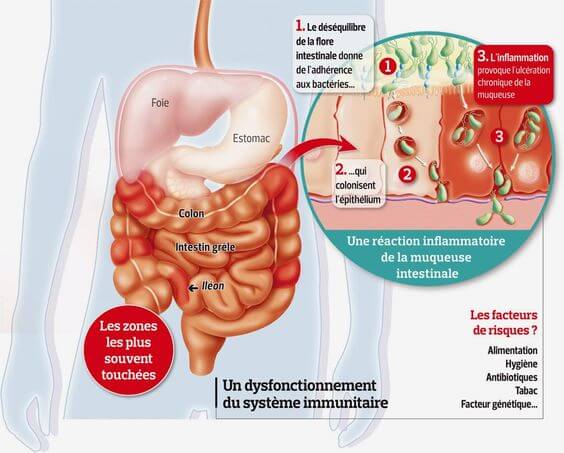
What are the symptoms of candidiasis?
In the case of candidiasis, we will find ourselves with a number of troublesome symptoms. These may include:
- Vaginal or oral mycosis (thrush), vaginitis
- Damaged nails and nail fungus
- Repeated bacterial infections
- Dermatological disorders
- Immune system dysfunction, allergies, food intolerances
- Migraines and headaches
- Depression, lack of concentration, anxiety, mental fog
- Insomnia, fatigue
- Digestive and respiratory disorders (especially bronchial tubes)
- Joint and muscle pain
- Metabolic disorders (weight gain, obesity)
- Decreased libido
- Sweet cravings and high drive tension (with a particular appetite for bread and sweet products)
- Etc…
What causes candidiasis?
The most common causes of candidiasis are :
Food
Candida is able to develop and transform into a fungus thanks to certain foods, particularly sugar, but all carbohydrates are involved, including fructose from fruit and carbohydrates from cereals. Yeast and other moulds are also used by candida to develop. So eating too many carbohydrates (cakes, pastries, breads, pastries, sweets, but also fruit, cereals and starchy foods) and too many moulds (cheese, alcohol, baking powder bread) can unbalance the intestinal flora in favour of candida albicans.
Stress and tiredness
Fatigue and chronic, repeated stress are factors in immune depression that can lead to a worsening or recurrence of candidiasis.
The antibiotics
Repeated use of antibiotics can over time weaken and unbalance the intestinal flora, eliminating beneficial bacteria to the detriment of the development of other bacteria such as candida albicans.
The contraceptive pill
High levels of oestrogen when taking hormonal treatments will lead to changes in the vaginal epithelium, producing glycogen which is used by candida to develop.
Diabetes mellitus
Pregnancy
In the case of pregnancy, when there are major hormonal and immune changes that favour the development of bacterial infections or proliferation, such as with candida albicans, a natural treatment is preferred to avoid miscarriage.
And corticosteroid therapy
What to do in the event of mycosis?
Conventional allopathic treatments involve taking antifungal agents. Even if, in most cases, people are relieved of their symptoms, in the case of severe and chronic candidiasis, the relief will be short-lived and, above all, if the cause of the problem is not treated, there is a risk that the vaginal mycosis will recur.
In my consultations, I regularly see women who have taken the classic anti-fungal treatment but who often fail to see any improvement in their condition after a year. The doctors then find themselves at a dead end, with no other solution to offer apart from taking probiotics, which, as we shall see, is obviously never enough, and can in rare cases make the situation worse.
Whether it’s vaginal or oral mycosis, it’s important to treat the infestation internally and treat the proliferation of Candida albicans from an intestinal point of view. Locally, however, in the case of vaginal mycosis, colloidal silver and essential oil-based ova can be used in parallel, to be bought or prepared in pharmacies.
Here are some natural remedies with no side effects that will help treat the problem at source.
What are the natural solutions for getting rid of candidiasis?
Anti-candidosis diet
The first thing to do as a matter of urgency, and throughout the repair and restoration process, to avoid feeding candida albicans, is to temporarily modify your diet by eliminating as much as possible of anything that could feed it. Once the candidiasis has been eradicated, you need to be careful not to eat as much sugar and to consume (slow) carbohydrates in moderate quantities.
Sugar in all its forms must therefore be eliminated (refined, raw or wholegrain sugar, honey, maple syrup, agave syrup, coconut sugar, sweeteners, etc.)
Avoid eating fruit that is (too) sweet – even if it means avoiding all fruit for a while in the case of very severe candidiasis – and eat it outside of meals.
Foods rich in yeast, ferments and moulds should also be avoided (bread, cakes, pastries, pizzas, etc.), as should all fermented products, including some that are usually good for the intestinal flora (cheese, sauerkraut, beer, cider, soy sauce, alcohol)
Dairy products should also be avoided as they contain too much lactose or are fermented.
Farmed meat is highly contaminated with bacteria, so it’s best to avoid it or eat organic meat instead.
Anything containing live yeast, such as brewer’s yeast-based food supplements, should also be avoided. You should also avoid medicines such as carbolevure or ultralevure, even though they are recommended by doctors for antibiotic or antifungal treatment. Other probiotic strains may be used.
Gluten should be avoided because of its harmful effect on the intestinal wall, and gluten-free cereals such as buckwheat, quinoa, rice, millet, etc. should be preferred.
Below is a list of foods that are prohibited or strongly advised against:
- Cane sugar, beet sugar, brown sugar, honey, maple syrup
- Sweets, pastries, cakes, buns, Viennese pastries
- Jams
- Ice creams
- Sodas, fruit juices
- White flours (bread, baguette, sandwich bread, pasta, rusks)
- Pizzas, quiche, puff pastry
- Pasta
- White rice
- Carrots, potatoes
- Maize
- Semolina couscous, bulgur
- Starch
- Milk chocolate, chocolate with less than 60% cocoa
- Puffed rice, cakes and cereals
You can eat lots of low-acid or low-sugar vegetables (keeping the amount of fruit reasonable), pulses (lentils, chickpeas, beans, split peas, etc.) and wholegrain cereals in moderate quantities.
Coconut oil contains caprylic acid with anti-fungal and anti-bacterial properties. Take one or two tablespoons a day and leave in the mouth for a few moments in the event of oral thrush.
Garlic is known for destroying biofilm and disinfecting intestinal flora through its antibacterial action. Consume without moderation, ideally with one or two cloves of raw garlic a day if you can stand it.
Sanitising and disinfecting intestinal and vaginal flora
The plants and essential oils known for their antibacterial and antifungal properties are :
Garlic, but also Ginger and Turmeric, which is anti-inflammatory and anti-free radical to protect the intestinal mucosa.
The essential oils of :
- Oregano
- Mountain savory
- Cinnamon
- Clove tree
Essential oils should be handled with care, so seek professional advice. However, you can find essential oil capsules from Pranarôm, such as Oleocaps 2 Intestinal Health, for example, or Oregano essential oil capsules.
Grapefruit seed extract is a well-known and highly effective natural broad-spectrum antibiotic, as well as a natural defence stimulant.
Caprylic acid and Berberine can also be used.
These treatments will also help to eliminate other intestinal parasites. In general, an anti-parasite treatment is recommended for general intestinal cleansing. This treatment can be carried out for a week around the full moon with green Walnut Shell and an antifungal/antiparasitic such as Lunoxy de Herbolistique or Synermiose.
Limiting the proliferation of candida albicans and stimulating immunity
For vaginal mycosis, essential oils can be used locally in ovules, except for pregnant women. Here is an example of a mixture to be made by the pharmacy per capsule:
- 100mg Rose Geranium EO (pelargogium X graveolens),
- 100mg Tea Tree EO (melaleuca alternifolia)
- 100mg Palmarosa EO (cymbopogon martinii)
- Calendula officinalis TM excipients qsp 3g ovule eg coconut butter or aloe vera
Lapacho also has antifungal and immunostimulant properties.
Essential oils to boost immunity :
- Savory
- Wallflower
Two essential oils found in Oleocaps 4 Immune System, for example.
Re-balancing and re-seeding the microbiota
As we saw in the article on intestinal flora, we can use our diet to treat our intestinal flora, but as this is weakened by candidiasis, we will start by using probiotics after cleansing the flora with essential oils or plants, for example. Probiotic strains are particularly recommended for supporting the immune system and restoring the balance of the intestinal flora.
For candidiasis, a combination of Lactobacillus and Saccharomyces Boulardii strains is preferable, as found in UltraFlora Duo by Bionutrics or Florimmu by Herbolistique, for example.
Repairing the intestinal mucosa
Turmeric and aloe vera are two ideal allies to help repair the mucosa damaged by candidiasis.
Turmeric, with its anti-inflammatory action, is a great repairer of the mucosa and of intestinal permeability, while aloe vera, with its anti-fungal action, will improve and detoxify the intestine.
Turmeric supplements containing black pepper should be avoided, as piperine increases intestinal permeability. Instead, a supplement containing ginger or fenugreek, whose fibres increase bioavailability, should be chosen. For example, Nutricuma Synergy from Bionutrics or Curcuma Bio with CurQFen® from Nutriandco.
As far as Aloe Vera is concerned, you should take high-quality aloe vera gel that is as concentrated as possible, rather than juice, which is likely to be acidic, and above all the gel helps to line the mucous membranes for better repair.
Not forgetting L-glutamine, in conjunction with probiotics, which will also help to renew the intestinal flora by nourishing the good bacteria. However, in the case of severe chronic candidiasis, L-glutamine should not be taken as a first-line treatment, as it could be used by Candida Albicans yeasts to develop and metabolise glutamate, which is known to be neurotoxic.
Detoxify
Chlorophyll is also a very good antifungal agent and will gently eliminate the proliferation of Candida albicans while helping to remove accumulated mycotoxins.
Zeolite also acts by absorbing toxins and neutralising the free radicals produced by candida.
A liver detox will also be necessary to rid the body of toxins released by the eradication of bacteria, thanks to:
- Milk thistle
- Black radish
And also drainage to support kidney detoxification at the same time as liver detoxification, for example with:
- Birch
- Dandelion
- Linden sapwood
- Nettle
- Ash
You can find products containing these different plants at Herbolistique (Liver Protection, General Drainage) or Biophenix (Drainage Balance, Liver Balance).
This part is all the more important as candidiasis is chronic.
Strengthen your immune system
We can finally strengthen the immune system with:
- Echinacea
- Lapacho
- Propolis and royal jelly
- Ginseng
- Maitake and Shiitake, powerful mushrooms known to stimulate the immune system.
N.B.: certain substances, even if they are plant-based, may be contraindicated. This is the case, for example, with all the plants mentioned above in the case of autoimmune diseases or organ transplants, as they are incompatible with immunosuppressants, or in the case of cancer, among other things. Ask your doctor for advice if in doubt.
Sleep, Stress and Emotions
Finally, remember to get enough sleep to support your immune system and manage your stress and emotions through, for example, calming, relaxing and sedative essential oils, meditation, cardiac coherence or yoga.
If in doubt, or if the symptoms persist, consider consulting a naturopath before the candidiasis becomes chronic or severe. In the case of chronic candidiasis, it is recommended that you seek treatment from a competent therapist.