What are probiotics?
The probiotics we find in pharmacies, drugstores, or organic health food shops are live bacteria that are used to repopulate and rebalance the intestinal flora or microbiota in order to help treat diseases or pathologies and improve health. The strains, their varieties and quantities will differ from one laboratory to another, depending on the need but also on the type of production. The quality of probiotics also varies from one manufacturer to another.
Dysbiosis
Many therapists, including myself, frequently use probiotics to help restore an unbalanced (intestinal dysbiosis), altered or even absent intestinal flora in cases of digestive system disorders, immune deficiency, severe, disabling or significant pathologies related to the state of the intestinal flora, or even in cases of nervous system disorders.
However, in cases where the subject has little or no symptoms that could be linked to intestinal imbalance, it is very common for some people to think, sometimes mistakenly, that they can optimise their well-being by taking probiotics. This is especially true given the recent craze and numerous scientific discoveries in recent years concerning the influence of intestinal flora on an individual’s overall wellbeing, which have brought new strains of bacteria into the spotlight and led to the development of specific and effective probiotics for particular problems (obesity, diabetes, psychiatric disorders, depression, irritable bowel syndrome, autoimmune diseases, etc.) [1][4] .
Indeed, studies [2][3] have shown that it is not relevant for healthy individuals to use probiotics unless they have one of the pathological conditions for which probiotics are known to be effective in relieving symptoms and helping to restore functional gut flora, particularly after antibiotic treatment. However, they are known to relieve or prevent diarrhoea caused by taking antibiotics. The individual’s ability to maintain and preserve this balance must also be taken into account; this will depend in particular on the quality of the epithelial mucus.
This is easy to understand when we consider that we are all, through our DNA, different beings and organisms and that, as a result, there are as many types of microbiota as there are genomes. Thus, there are billions of combinations of bacterial populations (good, bad and neutral, all living in symbiosis) and other microorganisms, distinct from one individual to another, which make them complex and unique ecosystems in equilibrium.
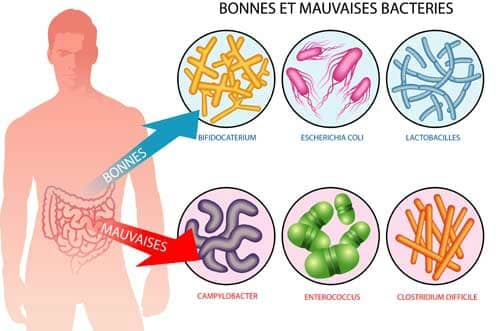
In addition, our intestinal flora is composed of 100,000 billion bacteria representing 800 to 1,000 different strains, and we have only studied – and currently know about – a few dozen intestinal bacteria, even though about ten of these bacteria are found in 99% of the population. However, it is difficult to give everyone the same set and quantity of these few bacteria and expect to obtain the same results for each individual. This is especially true since the composition of our gut flora also influences our biochemical processes such as digestion, assimilation, and breakdown of food, etc. That is why it is always best to consult your practitioner if you wish to take probiotics for a specific issue. They will be able to guide you towards the right products and dosages.
Why take care of your gut flora?
Below, we will look at the possible consequences of intestinal flora imbalances and how to avoid them before they cause symptoms or even trigger diseases. It is important to note that in some cases, significant dysbiosis such as severe candidiasis can take a long time to treat and sometimes a long time to diagnose. The patient’s journey can then become an ordeal, sometimes leading to despair and a search for medical help. Therefore, as prevention is better than cure, this article provides you with all the information you need to stay healthy on a daily basis and restore your gut flora and microbiota naturally.

Consequences of imbalances in the gut flora
Here are some common signs that may result from an imbalance in the gut flora or dysbiosis, such as in the case of candidiasis:
- Digestive disorders (gas, bloating, diarrhoea, constipation, irritable bowel syndrome, etc.) caused by the proliferation of “bad” bacteria and a lack of “good” bacteria responsible for digestive function
- Psychological or psychiatric disorders (depression, anxiety, autism, OCD, high impulsivity, etc.) due to a lack of neurotransmitters necessary for the nervous system, the production of which depends on certain bacteria[4].
- Skin (acne, eczema, rashes, psoriasis, etc.), due to intestinal permeability and a lack of bacteria, which allows macronutrients or waste products to pass into the bloodstream and then have to be eliminated through the skin (which is one of the emunctory organs).
- Autoimmune diseases, chronic and recurrent infections, due to weakness or dysfunction of the immune system, whose robustness depends on the state of the intestinal flora, and due to the development of bacteria or yeasts (mycoses and candidiasis due to proliferation of Candida Albicans, gastric ulcer caused by Helicobacter pylori, infectious diarrhoea caused by Clostridium difficile, etc.), and by intestinal inflammation often linked to dysbiosis and intestinal permeability.
- Vitamin and mineral deficiencies due to a failure in the nutrient assimilation process caused by a lack of the bacteria necessary for this function, etc.
There are many other consequences of an imbalance in the gut flora.
PROTOCOL FOR BOOSTING YOUR IMMUNITY
Causes of these imbalances
There are many reasons why we may have dysbiosis. It is important to know that nowadays, it is very easy to end up with an imbalance in our microbiota. Here are the main causes of this imbalance:
- Chronic and repeated stress
- Repeated antibiotic treatments
- Unbalanced diet, particularly rich in sugars, meat, saturated animal fats and trans fats, heavy metals, industrial products, preservatives, sweeteners, colourings and additives, alcohol, and very low in vegetables
- Deficient basic microbiota, which may be linked to a lack of breastfeeding as an infant, birth by caesarean section, or altered by repeated early antibiotic use or maternal dysbiosis during pregnancy
- Genetic inheritance
- Medication use
- Tobacco
- Bacterial infections and food contamination.
TAKING CARE OF YOUR MICROBIOTA IS ESSENTIAL FOR HEALTH AND WELL-BEING
We now understand the importance of taking care of our microbiota and therefore our gut flora. This gut flora ultimately regulates and orchestrates our body’s processes so that it can function to its full potential. In short, the microbiota is the physical and organic foundation of our health and our physical, emotional and mental well-being.
Now that we have seen what the microbiota is and its importance, but also the limitations of taking probiotics, I am going to give you seven tips on how to take care of your gut flora without resorting to probiotics, knowing that there are other solutions.
1) Eat as many organic vegetables as possible and combat constipation
In order to maintain and nourish the bacteria that populate our intestines, it is necessary to provide them with fuel, as they are living organisms. First, we can nourish them with plant fibres, which will enable them to develop. This same fibre also helps to eliminate food waste and cleanse the colon, thereby purifying the intestines. The more vegetables and plants we eat (raw, as much as digestion allows, or cooked), the more fibre and therefore fuel we provide for the bacteria in our intestinal flora. This is the basis. We must also remember to drink enough water.
2) Limit meat consumption
Unlike plant residues, which also help sweep the colon and eliminate faeces, meat residues (muscle tissue) stagnate in the colon and promote putrefactive flora. There, bacteria release toxins and, over time, if these residues continue to stagnate in the colon and intestine, they will cause inflammation and intestinal permeability, as well as an imbalance in the flora. Limiting meat and animal tissue in favour of plant-based foods will therefore be beneficial for the development of healthy intestinal flora, as well as limiting the inflammatory impact of excess meat.
3) Consume natural probiotics
Certain foods naturally contain probiotics or bacteria. We are all familiar with the lactic ferments in yoghurt, but in terms of quality, we should focus on lacto-fermented or fermented products rich in probiotics: sauerkraut, miso, fermented soybeans, natto, tempeh, kimchi, tamari (gluten-free fermented soy sauce), kombucha, kefir, olives, gherkins, other fermented vegetables, etc. Regular consumption of these types of foods will help develop your intestinal flora with a good diversity of bacteria.
4) Maintain your gut flora and nourish bacteria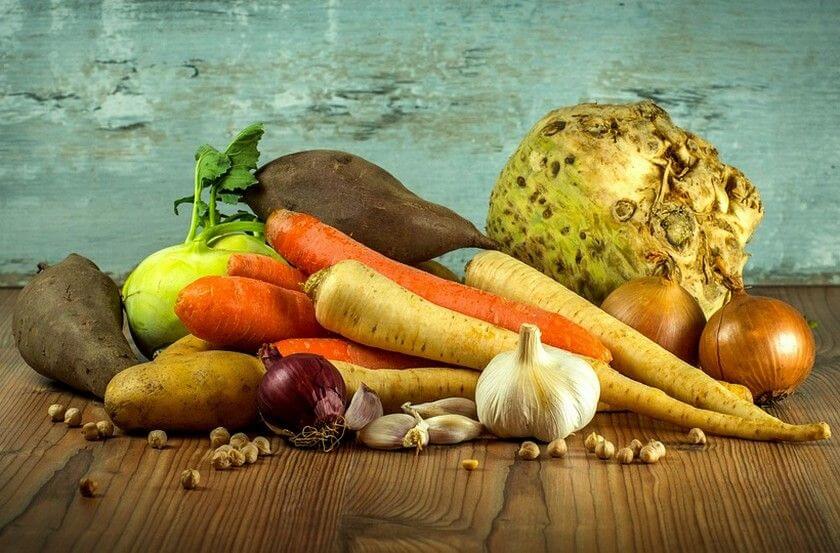
Once the intestinal flora has been repopulated, these bacteria must be nourished and their growth encouraged. We have seen that plant fibres can nourish bacteria (but they are mainly used to clear waste from the colon and intestines).
The same is true for what are known as prebiotics, which are specific carbohydrate chains that optimise the growth and development of these bacteria. These include inulin, fructo-oligosaccharides (or FOS) and galacto-oligosaccharides (or GOS), for example.
Certain foods are very rich in these: leeks, artichokes, asparagus, parsnips, Jerusalem artichokes, garlic, onions, shallots, salsify, chicory, bananas (especially if they are not too ripe), etc. Eating these foods regularly will nourish our intestinal flora and allow our good bacteria to develop and grow stronger.
However, caution is advised for people who do not yet have enough “good” bacteria: if you are not used to consuming prebiotics, too much of them could cause digestive problems, so you should introduce them gradually to allow your intestinal flora to adjust. The same applies to raw vegetables.
Thus, in cases of severe dysbiosis, probiotics (without prebiotics initially) may be recommended to restore the flora and provide relief as quickly as possible.
5) Plants, foods and spices for cleansing and disinfecting
In order to eliminate pathogenic bacteria and cleanse and purify the intestinal flora, we can use several foods, dietary supplements or plants that are very effective, such as:
- Grapefruit seed extract or GSE,
- olive tree,
- garlic,
- cinnamon,
- cloves,
- bay leaf,
- oregano,
- thyme (also usable as essential oil on the advice of a therapist).
Finally, caprylic acid is an excellent natural antifungal agent found in coconut oil or butter, for example, and helps to limit the proliferation of Candida albicans. See the article on Candidiasis. So remember to consume these herbs and spices on a daily basis.