Getting rid of seasonal allergies: Natural solutions
Allergy is a real scourge, but one that is still largely unknown. It affects over 30% of the French population and, according to the WHO (World Health Organisation), is the fourth most common disease worldwide! In 92% of cases reported in France, allergies are seasonal. The most common symptoms occur in spring and summer, when outdoor allergens such as tree pollens, grasses and herbaceous plants affect the daily lives of sufferers.
Here’s a close-up look at this public health problem, which has been on the increase in recent decades in France and abroad, affecting 80% of Germans, 67% of Spaniards and 49% of Italians …
Definition of seasonal allergies
Also known as allergic rhinitis, pollinosis or, more commonly, hay fever, seasonal allergies are caused by hypersensitivity to outdoor allergens. As their name suggests, they occur during a specific period of the year (generally from March to October):
- early spring: pollen allergies
- summer: grass allergies
- autumn: grass allergies, ragweed, mugwort or plantain pollen, moulds, dust mites, etc.
Seasonal allergies occur when the body overreacts to external substances known as allergens, every year and at the same time of year.
Causes of the increase in allergies
Seasonal allergies are the result of a physiological process caused by contact with allergens, whether through the air or the skin. The body reacts and defends itself against airborne pollen or grasses, which are deposited directly on the mucous membranes of the nose, mouth or eyes. When an allergic reaction is triggered, various respiratory and non-respiratory symptoms appear.
 With climate change and pollution, allergens carried by particles in the air are increasingly virulent and very aggressive. Added to this is the deterioration and decline in the quality of the food we eat in terms of nutritional intake and protection, leading to a decline in the effectiveness and dysfunction of the immune system.
The increase in seasonal allergies is therefore also associated with intestinal hyperpermeability or dysbiosis. By preventing the body from systematically triggering an inflammatory assault when faced with external elements, in this case foreign foods, the digestive system establishes a system of tolerance.
Faced with this intestinal hyperpermeability, the immune system goes haywire and releases more antibodies, creating intolerance to other allergens, including pollens.
Symptoms such as difficulty breathing or a blocked nose, watery eyes or swollen eyelids, skin rashes and itching… can then occur.
Natural solutions, use and dosage
Allergic rhinitis can affect anyone, at any time of life. When it comes to seasonal allergies, there are preventive and curative measures to be taken.
Probiotics, recommended to combat allergies
Given the interaction between intestinal permeability, microbiota imbalance, the creation of antibodies and allergic reactions, it is advisable to influence the composition of the intestinal microbiota with probiotics, prebiotics and glutamine to overcome seasonal allergies.
By boosting immunity and restoring the intestinal flora, probiotics have the ability to induce and maintain tolerance to allergens. Glutamine helps to correct intestinal permeability. And let’s not forget vitamin D, which spearheads the proper functioning of the immune system.
It is also possible to restore the intestinal flora by changing your diet without using probiotics – see the article “7 tips for caring for your intestinal flora without probiotics“.
Repairing intestinal permeability
We should also take care to repair the intestinal mucosa in the event of intestinal permeability, which could allow allergens and other bacteria to pass into the bloodstream, particularly in the case of food and skin allergies, thanks to L-glutamine or Turmeric.
The action of trace elements
In the event of a seasonal allergy, oligotherapy is recommended to strengthen the body in the face of allergens. Trace elements such as Zinc, Manganese and Magnesium reduce inflammatory reactions and act effectively on the immune system. To be taken in the form of drinkable ampoules or tablets, they should be taken on an empty stomach as part of a cure as soon as winter ends, or as an in-depth treatment during the pollen season.
Zinc protects the body, helps white blood cells multiply and plays an active role in protein synthesis. By stimulating immunity and activating antibodies, this trace element is effective in preventing allergic reactions. It is also an excellent membrane stabiliser, hence its antihistaminic properties. It is also known as a powerful immunoregulator, essential for optimising the body’s immune functions.
Manganese, for its part, modifies the atopic terrain by inhibiting the secretion of histamine, the main chemical component released by the immune system in the event of allergy. Known as the anti-allergic par excellence, this trace element also helps to strengthen mucous membranes, which are often badly damaged by allergens.
Magnesium helps strengthen muscles and nerves, and is essential for stabilising the body in the event of an allergic reaction. It also helps to detoxify the body. It is also a natural antihistamine through its regulatory effect on the release of histamine.

Vitamin C, anti-allergic and antihistamine
Allergic symptoms are often associated with a vitamin C deficiency. This is all the more common in victims of pollen, grass and hay allergies. A course of vitamin C helps to trigger an antitoxic and immunoregulatory reaction to prevent allergen attacks. What’s more, it acts as a direct antihistamine, anti-inflammatory and anti-edema agent for the microcirculation. By acting like corticoids, vitamin C also has well-known anti-infectious and antiviral properties, and should be combined with quercetin to enhance its effects.
Natural anti-inflammatories
To combat inflammation of the mucous membranes and repair the intestinal tract, we can use omegas 3, turmeric and blackcurrant in gemmotherapy, for example.
The effects of Quercetin on seasonal allergies
Found in varying quantities in fruit, such as apple skins, red fruit (grapes, berries, cherries) and citrus fruit; in vegetables, such as broccoli and green beans; and in drinks, including green tea and red wine… but especially in red onions and garlic, quercetin, sometimes called quercetol, is one of the flavonoids with antioxidant properties. This type of plant pigment inhibits the action of histamine by acting directly on mast cells, the cells responsible for allergic reactions.
You can take advantage of Quercetin’s antihistamine properties by eating fruit and vegetables rich in it, or by opting for capsules or tablets to be taken as a course of treatment on an empty stomach over a period of 1 month.

The power of quail eggs
Quail eggs have been used since ancient times and are recognised as a powerful remedy for all types of allergy. It is extremely rich in nutrients, particularly proteins, vitamins (including B1 and B2), minerals (including phosphorus and iron) and enzymes. Above all, it contains exceptional quantities of ovomucoid glycoproteins, which act on one of the main components of allergic reactions: trypsin.
A 30-day course of quail eggs, at a rate of around 3 eggs a day, is an excellent alternative for taking advantage of their high nutritional content, boosting internal balance and optimising the immune system.
As a first-line treatment, I recommend that you try quail eggs combined with Quercetin for rapid effects. One of the specific products on the market is from the Copmed laboratory: Quail Eggs + Quercetin, which acts on the immune system and also provides nutrients to modulate and regulate the immune system and act on inflammation of the mucous membranes (Zinc, Manganese, Turmeric and Nettle).
However, it is even better to take preventive cures a few weeks before the season if allergies are very debilitating.
Aromatherapy, anti-allergy essential oils
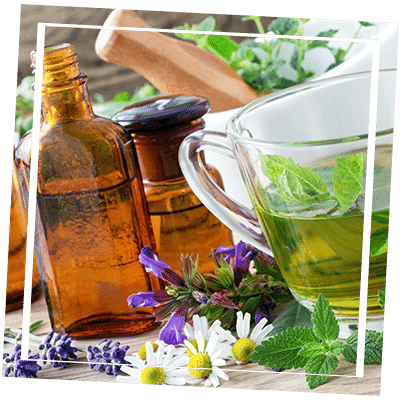 Essential oils are also recommended for preventing and treating seasonal allergies.
The main essential oils with anti-allergy and anti-inflammatory properties include tarragon oil, Roman chamomile, German chamomile and Katafray.
The aim: to tone up the body and calm allergic reactions. However, aromatherapy should only be used occasionally, at the rate of 1 to 2 drops of essential oil, 2 to 3 times a day.
See my advice in the article in the magazine “Côte Basque Madame – Spring 2019”.
Homeopathy: Pollens, Lung Histamine, Apis Mellifica, Allium Cepa
And finally, to relieve symptoms or prevent allergic reactions by working on the ground, homeopathy is an interesting and highly effective approach.
To overcome allergic rhinitis, the dosage is generally one dose of 9CH Pollen per week.
For respiratory allergies, a treatment of 3 granules of Lung histamine 9 CH, twice a day, is recommended.
In the event of an allergy attack, the dosage is 3 granules of Apis mellifica 9 CH, twice a day, or 3 granules of Allium cepa 9 CH, three times a day, for irritated nostrils, watery eyes and frequent sneezing.
Gemmotherapy
As a base treatment, for example, we can use macerates of Rosemary, Blackcurrant, Viorne and Fig buds.
In a nutshell,
In the event of attacks and for relief: Quail’s eggs, Quercetin, trace elements (Zn, Mn), Magnesium, Vitamin C, essential oils and Blackcurrant in gemmotherapy, will provide rapid relief from attacks and allergic symptoms
In prevention and throughout the year, it will be useful to work on the ground to rebalance and regulate the immune system using :
- homeopathy
- liver detox
- vegetarian-based diet anti-inflammatory and antioxidant (turmeric, omegas 3)
- take care of your intestinal flora
- courses of magnesium, vitamin C and D (to correct deficiencies, especially in winter)
- quercetin, a powerful antioxidant, anti-histamine and anti-inflammatory for the ENT system
- taking trace elements (e.g. marine plasma)
- plants and mushrooms that modulate and regulate the immune system (Plantain, Reishi, Shiitake, Maitake, Pleurote. ..)
For the record, I myself was very allergic as a teenager (taking anti-histamines every year) to a degree that made my daily life very difficult. It was at the height of my attacks, at the age of 18, that I intuitively decided to trust my body’s ability to heal itself; I refused the corticosteroids that my GP suggested as a last resort, given the state I was in. A solitary path of patience and faith then began for me and led me to alternative medicines (homeopathy, nutrition, plants). In just a few years, I was completely free of all (absolutely all) my allergies (house dust mites, pollens, moulds, fungi, dust, smoke, cat hair, etc.) without ever having to resort to drugs or allopathic desensitisation.
And that’s how, at the age of 20, I started a new way of life, without medication, using plants and essential oils, and new eating habits (organic and plant-based), before finally choosing to make it my profession some ten years later. Today, I’ve been sharing my knowledge and experience in the field of natural health with you for over 10 years. see Who I am
Selection of products
Magnesium:
D-Stress booster (Synergia)
Magoptimum (Herbolistique)
Vitamin C:
Equilibre vitamine C (Biophenix)
Vitamin C (Dynveo)
Quail eggs:
Synergised quail eggs (Copmed) containing quercetin
Gemmotherapy:
Gemo-Al (La Royale)
GemmoAller (Herbolistique)
Essential oils (Copmed)
Quercetin:
Quercetin (Dynveo, order code: 8TQQSA9N)
Curcucétine (Copmed)
Trace elements :
Marine plasma (Sea-AquaCell)
Glutamine:
GlutaNutrics (Bionutrics)
Zeolite permeability (Herbolistique)
Curcuma :
Nutricuma Synergy (Bionutrics)
Contact details of the labs I recommend:
La Royale
www.la-royale.com
Tel : 00800 29 06 82 76 or 00 352 55 96 44
Order code: 18082
Dynveo
www.dynveo.fr
Tel : 04.83.43.40.03
info@dynveo.com
Order code with 10% discount: 8TQQSA9N
Bionutrics / Metagenics (also available in some large parapharmacies)
www.bionutrics.fr
Tel : 0800 900 630 or +32 42 47 61 61
info@bionutrics.com
Order code : R354
Herbolistique
www.herbolistique.com
Tel : +33 2 51 63 06 24
contact@herbolistique.com
Order code : F 64267
Copmed
www.copmed.fr
Tel : +33 5 49 28 01 36
contact@copmed.fr
Order code : A64493