Discover the SIBONet programme
The only training course for the general public to achieve lasting freedom from SIBO
Access now!
An estimated 4 million people in France could be affected by SIBO, a condition that is still little-known. And for good reason: it is unfairly associated with other diseases.
What are its symptoms? Painful or unpleasant digestion, bloating (swelling of the stomach), gas and flatulence, stomach ache, intense tiredness , even joint pain and mental fog. So how do you identify SIBO and how do you treat it?
If you have the following questions:
How is SIBO treated or cured?
What are the symptoms of SIBO?
How is SIBO treated?
How is SIBO diagnosed or detected?
How can SIBO be treated naturally?
What to eat and what to eat when you have SIBO?
Then you’ll find as many answers as you can in this article on how to regain your health.
What is SIBO?
SIBO or Small Intestinal Bacterial Overgrowth is defined as an excessive proliferation of bacteria in the small intestine. This bacterial colonisation causes digestive problems of varying degrees of pain and discomfort because, unlike the colon, the small intestine harbours very few bacteria. The main function of this organ is to absorb the nutrients produced by the breakdown of food, so the bacteria that proliferate in the case of SIBO create a fermentation of undigested food, resulting in excessive gas.
However, the term IMO(Intestinal Methanogen Overgrowth) is increasingly associated with SIBO, and also corresponds to a proliferation, but this time of archaea, which are other micro-organisms in the microbiota along with bacteria and fungi, and some of which produce methane. They are called methanogens and are often found in irritable bowel syndrome with constipation, for example.
We may also hear talk of LIBO (Large Intestine Bacterial Overgrowt) and in this case we are referring to a pullulation localised in the large intestine (or colon) but this pullulation is mainly associated with an excess of methane and in this case we are also talking about IMO.
What are the symptoms of SIBO/IMO?
Although SIBO can sometimes be asymptomatic, the main symptoms that can be found in SIBO are :
- gastro-oesophageal reflux,
- flatulence
- abdominal pain
- joint pain,
- digestive spasms,
- nausea, vomiting,
- gas and belching,
- mucus in the stools,
- diarrhoea and/or constipation.
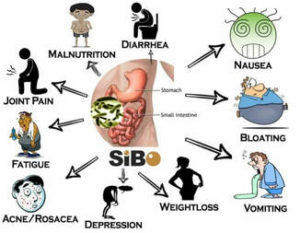
In some cases, SIBO may be accompanied by :
- depression,
- feelings of anxiety,
- difficulty concentrating, mental fog or haze,
- stress
- or often weight loss.
Causes and consequences of SIBO/IMO
This digestive pathology is also common in cases of nutritional deficiency, as the proliferation of bacteria inflames and damages the intestinal mucosa, reducing the absorption of nutrients (the main function of the small intestine), including fatty acids and vitamins.
In fact, SIBO leads to sub-optimal biliary function, as excess bacteria compete with omega-3s and fatty acids with anti-inflammatory properties. At the same time, a vitamin B12 and iron deficiency may be observed, leading to megaloblastic or microcytic anaemia, cognitive problems, a feeling of fatigue and even depression.
In the case of SIBO, the mucosa of the small intestine is invaded by certain bacteria that should only be present in certain quantities. This creates a dysbiosis, throwing the microbiota out of balance, damaging the protective mucus and causing intestinal inflammation through the excessive production of gas, which can be irritating, and through the fermentation and putrefaction it causes in the intestines.
This causes an increase in intestinal permeability, which, among other things, promotes the passage of bacterial fragments and dietary peptides into the bloodstream. By triggering an immune system reaction, SIBO through intestinal hyperpermeability can then be associated with migraines, metabolic syndrome, cardiovascular disease, histamine intolerance or obesity, but also allergic manifestations and food intolerances.
The correlation between SIBO and diabetes is reflected in a disturbance of the migratory motor complex (MMC). In a healthy organism, the small intestine empties regularly into the colon every 90 to 120 minutes, but an alteration in the MMC leads to a disturbance in intestinal motor function, whether caused by a bacterial infection such as SIBO or by diabetic neuropathy affecting the vagus nerve.
SIBO can also be explained by hypochlorhydria, a reduction in stomach acidity. The normal acidity of the stomach kills most of the bacteria in food and prevents any intensive bacterial proliferation.
In the case of hypochlorhydria following the use of PPIs (proton pump inhibitors) and other gastro-oesophageal reflux treatments, the stomach has difficulty pre-digesting food due to the drop in acidity. This gives bacteria plenty of time to proliferate in the small intestine. Insufficient production of pancreatic enzymes and biliary insufficiency can also be the cause of SIBO. In these cases, either foods, including carbohydrate-type foods, are not sufficiently broken down (which will then ferment and cause gas), or the bile deficiency tends to slow down intestinal transit, causing constipation and then fermentation associated with putrefaction (which induces foul-smelling gas). These inflammations and the resulting dysbiosis in the colon can also cause diarrhoea.
Mucus may also be present in the stools, due to hypersecretion of mucus in the colon, which also indicates intestinal inflammation.
Other causes of SIBO include digestive tract surgery, IBD, dyspepsia, diabetes, pancreatitis, etc.
Stress and fatigue are among the symptoms of SIBO. But they can also be the cause. Stress reduces blood flow to the intestine. With less oxygen than necessary, the intestine has difficulty functioning properly and repairing itself in the event of injury. On the contrary, existing lesions can become enlarged as a result of hypercellular contraction. Under stress, hypochlorhydria is also common, reducing stomach acidity and bacterial elimination.
By altering intestinal motility, stress acts on the vagus nerve and encourages bacterial overgrowth caused by an incomplete digestive process. By reducing the production of protective mucus, stress can also encourage the proliferation of bacteria to the detriment of more beneficial bacteria such as Lactobacilli and Bifidobacteria. Finally, stress reduces levels of immunoglobulins such as IgA, which are responsible for intestinal immunity. This drop in immunity makes us more vulnerable to infections, whether viral or bacterial, but also to the proliferation of Candida Albicans(see my article on Candidiasis).
SIBO is generally associated with an unsuitable lifestyle (stress management, sleep and diet). This is particularly the case for people who eat a diet that is far too rich in fermentable carbohydrates. These include simple sugars or monosaccharides, such as fructose in table sugar, glucose-fructose syrup, honey and fruit. Disaccharides are also fermentable foods and are found mainly in lactose or milk sugar, such as milk, yoghurt and slightly fermented cheeses. Oligosaccharides are also favourable to bacterial proliferation because of their fermentable quality. In the case of gastric sensitivity, too many legumes such as peas and chickpeas, vegetables such as leeks, beetroot and garlic, and wheat cereals can encourage the development of SIBO. Finally, most processed foods are highly fermentable and can encourage bacterial growth.
Other direct or indirect causes of SIBO can be listed. These include inadequate chewing, which results in food that is poorly broken down in the small intestine and therefore inaccessible to digestive enzymes. Insufficiently broken down during the digestion process, this food is difficult for the intestine to assimilate and becomes a substrate for the bacteria already present. Surgery – particularly gastrointestinal or gynaecological – can also alter intestinal motricity and encourage SIBO. Toxicity in the diet associated with the presence of pesticides or food additives, age and excessive alcohol and coffee consumption can also irritate the intestinal walls and encourage microbial proliferation in the small intestine.
What causes SIBO?
To summarise the possible causes of SIBO :
- Chronic and repeated stress leading to hypothyroidism and/or alteration of the migrant motor complex
- Poor mastication
- Unsuitable diet rich in coffee, alcohol and spices, leading to hypochlorhydria
- Use of drugs such as antibiotics and PPIs
- Lack of gastric juices and digestive enzymes
- Lack of physical activity
- Chronic inflammatory bowel disease
- Food poisoning
What are the consequences of SIBO?
And the consequences of SIBO
- Nutritional deficiencies
- Reduced immune system
- Candidiasis
- Weight loss
- Metabolic and thyroid disorders
- Weight gain
- Extreme fatigue
- Intestinal permeability
- Allergies and intolerances
- Joint pain
- Persistent chronic cough
The causal or aggravating factors of SIBO are very diverse. Symptoms, meanwhile, may be associated with other pathologies, often making SIBO difficult to identify. As with SIFO (Small Intestinal Fungal Overgrowth), which is an excessive proliferation of fungi in the small intestine, often Candida, similar to candidiasis, which can be found elsewhere in the body, often in the intestine and colon. Whether fungal (SIFO) or bacterial (SIBO), these disorders of the small intestine weaken the immune system.
How is SIBO diagnosed?
SIBO is still very little known in France, and is very poorly diagnosed by the general medical community. In recent years, however, thanks to best-selling books such as “Le charme discret de l’intestin” by Giulia Enders and “A fleur de pets” by Dora Moutot, French people have been discovering this disabling condition, which is actually more widespread than previously thought. It is now possible to find more and more information in French, whereas until recently it was only available in English. In the USA, SIBO is already much better known and is treated by many doctors and naturopaths trained and specialised in this condition.
The difficulty in diagnosing SIBO also lies in the fact that too many doctors still confuse the symptoms with irritable bowel syndrome (IBS) and colopathy, as well as celiac disease and lactose intolerance. Unfortunately, this lack of knowledge of the subject leads too many patients with this chronic disease to “wander through medical channels, suffering both physically and psychologically”[i], when they are not simply sent home with the all-too-familiar “it’s all in your head, little lady” and a prescription for anti-depressants…
Despite this, there are many hepato-gastroenterology departments in French hospitals that are familiar with this pathology and are also equipped with a machine that can identify the bacterial species present by analysing respiratory gases using advanced tests. This machine, manufactured by Quintron, is one of the few that can detect the gases present more or less reliably and with a high degree of sensitivity, and whose method and analysis have been validated by international consensus.
If in doubt, you can estimate the possibility of SIBO using the questionnaire which can be downloaded here. However, it will obviously not be enough to diagnose SIBO, but it may help you to assess the likelihood of SIBO and then go and see a doctor for a breathing gas test, which will make the real diagnosis.
To benefit from this test, there are 3 more or less reliable, more or less accurate possibilities:
-
- The cheapest solution: ask your GP for a prescription and make an appointment with a university hospital that carries out the test using the appropriate machine. Disadvantage: the waiting time for this solution can be very long, depending on the hospital, and it’s not unusual for an appointment to take over a month. Advantage: you won’t have to pay anything, as the test is fully covered by Social Security with your prescription. In France, you can contact the Synlab Barla lab and the Alphabio Ibiote lab in Marseille, where you will be partially reimbursed with a prescription for an on-site or home test.
- The quickest solution: carry out the test at home. You can go to a private laboratory that is also equipped with the Quintron machine. This will cost you between €50 and €150, and you will have to collect your exhaled gases yourself in tubes and send them by post to the chosen laboratory. On the internet you can find Ibiote (subject to eligibility), SiboLab in Germany, the less expensive Teletest or Centro Diagnostico Calderon in Spain, as well as other labs in Europe and the UK that offer home sampling kits.
- The least accurate solution: the bacterial urinary organic metabolites (or UOM) test, which indirectly analyses the excessive presence of certain types of fermentation or putrefaction bacteria (more commonly Closdridies) by measuring the metabolites produced by the breakdown of certain nutrients by these bacteria. This test is carried out in certain laboratories such as LIMS in Belgium (the test is called DMI), the Bio Avenir laboratory (formerly Barbier), Synlab or Cerba in the Paris region.
In the first two cases of SIBO respiratory tests, it is very important to prepare the food and digestive tract for a few days before the test (usually between 1 and 3 days) and to fast for 12 hours before taking the gas, to ensure that the test results are as reliable and accurate as possible. The test will also be carried out 1 month after taking antibiotics or antibacterial drugs, and you should stop taking any food supplements 15 days to 1 week beforehand. I strongly recommend that you contact your naturopath trained in SIBO to help you apply this preparation correctly.
Lactulose is most often used for these tests, but on request it will be possible to carry out a glucose or fructose test, depending on the request of the patient and the prescribing doctor (particularly in cases of diabetes if the proposed substrate is glucose). For a better interpretation, I recommend choosing lactulose.
What results can be used to identify SIBO?
Depending on the results of the various tests and analyses, if they confirm SIBO, you may find yourself in one of the following situations:
- Predominantly Hydrogen (H2)
- Predominantly Methane (CH4)
- Predominantly hydrogen sulphide (H2S) due to the absence or low level of H2 and CH4 gases in the results
The first 2 are the most frequently encountered situations and the very last is less frequently encountered. However, it should be noted that the3rd is the most aggressive for the mucous membranes and the entire digestive system, and can also lead to candidiasis, which also needs to be treated, as well as serious deficiencies.
Methane-dominant SIBO is often associated with constipation and odorous gas.
Following the results, your specialist practitioner trained in SIBO will be able to suggest the protocol best suited to your situation, both in terms of antibacterial or antifungal active ingredients and solutions for repairing gastric function, and in terms of the specific diet he/she will suggest.
Some people are tested for another type of gas, methylacetate (C3H6O2), which is not mentioned in the international consensus and has not been tested by the CHU machines and labs mentioned above, but only by certain naturopaths trained by Dr Bruno Donatini who carry out tests with GazDetect, which is not a measuring instrument approved by the international SIBO/IMO study community. As a result, it is not possible to guarantee the reliability of this type of gas on a consensual basis.
Allopathic treatments
As for the treatment your doctor may prescribe, it will mainly involve antibiotics and/or antiparasitics. The most common and apparently effective are metronidazole (Flagyl), rifaximin (based on rifamycin), neomycin and even amoxycilin. Treatments generally last 15 days and people feel relief fairly quickly. The disadvantage is that the relief is often short-lived and there are many recurrences.
Then there’s the lack of treatment for the source of the problem, as we saw above. The causes are varied and if the initial cause(s) are not resolved (poor gastric emptying, stress, poor chewing, unbalanced diet, ….), SIBO can reappear very easily. It should be borne in mind that in 75% of cases, SIBO is chronic and a relapse is possible after a certain period of remission (often 2 to 3 months). This explains why treating the symptoms is not enough.
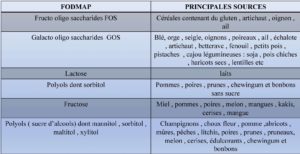
At the same time, a restrictive diet low in FODMAPs is almost systematically proposed, except in the case of H2S (hydrogen sulphide) SIBO, where the diet should instead be rich in fibre and low in fats and animal meats to prevent the development of this gas by excess bacteria of the Desulfovibrio or Bilolphila wadsworthia type.
Personally, I find this diet far too restrictive and, above all, prone to deficiencies, and I only recommend it at the start of the protocol for a maximum of 8 weeks (usually 6 weeks), the time needed to repair as much as possible and restart the defective functions that are responsible for the development of SIBO. Then, when the person is already well relieved, they can very gradually reintroduce FODMAPs into their diet while continuing with the protocol.
Natural solutions for SIBO
As far as natural solutions are concerned, we have a number of active ingredients and tools that can be used to treat this imbalance in the intestinal microbiota naturally and more or less quickly.
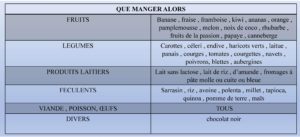
As we saw above, it will be useful to follow a particular diet that is balanced, but not very fermentable to begin with. This is because the fermentation of food must take place in the colon and not in the small intestine. To avoid feeding the bacteria responsible for SIBO, we need to eat temporarily fewer fibre-rich vegetables, as well as fewer starchy foods and cheeses. Instead, focus on vegetables low in oligosaccharides, including carrots and celery, fish, eggs and non-industrial meats, and low-sugar red fruit, for as long as it takes to restore the intestinal microbiota.
The FODMAP diet is one of the diets to be recommended. Initiated by nutritionist Sue Shepard, this diet, which is highly popular in cases of irritable bowel syndrome (IBS), aims to favour meals without ‘fermentable’ carbohydrates. Standing for Fermentable, Oligosaccharides, Disaccharides, Monosaccharides, And Polyols, a diet low in FODMAPs considerably reduces the proliferation of bacteria and fungi in the small intestine and promotes digestive comfort. Of course, this diet is not definitive and a gradual reintroduction of these foods should be planned as soon as possible and as soon as the intestinal balance is restored.
However, as part of my support, and having been trained by an American doctor, I use the biphasic diet designed by Dr Allison Siebecker instead of the FODMAPs diet, adapted to the individual in the event of sensitivity or intolerance (histamine, salicylates, etc.). It will be a little more precise and specific to the SIBO present and there may be exceptions and adaptations. For example, in the case of H2S SIBO, a Low Sulphur diet (low in foods rich in sulphur or sulphites or sulphates or sulphur-containing amino acids) and high in fibre is recommended rather than the biphasic diet. As you will have understood, SIBO is a complex pathology to diagnose and treat, so beware of self-treatment if you don’t know what type of SIBO you have.
In general, and depending on the practitioner, the stages of repair and protocol are often in the following order:
Repairing the intestinal mucosa
As soon as possible, we’ll focus on repairing and restoring mucus and intestinal impermeability, while treating the inflammation of the mucous membranes. To do this, vitamin D, turmeric (not necessarily as a first-line treatment when there is a sensation of digestive burning), boswellia serrata, Zinc-L-Carnosine, L-glutamine and L-Methionine, but particularly aloe vera gel, Fig and Walnut buds or chios mastic will be the main tools used for this important and primordial task.
Cleaning up the intestinal microbiota
Herbal medicine plays an important role in the treatment of SIBO. Anti-microbial and anti-fungal plants such as garlic are preferred, especially for methane-dominant SIBO. Raw, dried, powdered…garlic can be eaten in a variety of ways while preserving its antiviral and antioxidant properties. Essential oils of coriander, peppermint, caraway, lavender,oregano, thyme and cloves are also appreciated for their anti-bacterial and anti-fungal properties. It should be noted, however, that these essential oils can affect the gastric and intestinal mucosa if consumed undiluted.
In the case of SIBO, it is preferable to opt for gastro-resistant capsules or in the form of emulsified essential oil or incorporated into certain supplements. What’s more, it’s essential that courses of treatment are of short duration (ten days maximum), and are repeated if necessary to prevent the treatment from altering the digestive process and having too great an impact on the liver. Grapefruit seed extract, plants rich in berberine (which is also effective against biofilms) including barberry,caprylic acid, mint, savory,oregano, lapacho, pomegranate and green tea are all ways of cleaning up the intestinal flora and maintaining good bacteria. Colloidal silver can also be used.
To combat gas and flatulence, use chlorophyll and carminative plants such as lemon balm, basil and peppermint.
You should also ensure that you have good intestinal hygiene (as long as you are chronically constipated, this will not encourage healthy intestinal flora, for example). For all chronic constipation, it is essential to work on the root of the problem (vagus nerve, medication, stress, etc.).
Repairing gastric function
As regards treatment of the poor gastric emptying involved in the onset of SIBO, it is essential not to forget to tackle gastric reactivation and regulate the Migrating Motor Complex by using prokinetic plants, i.e. plants that stimulate the food bolus to advance through the digestive system, such as ginger, fennel, lemon balm,angelica, camomile, verbena, ….. This phase is very important to avoid relapses for as long as possible.
Restoring healthy intestinal flora
Ultimately, of course, it is worth restoring and maintaining a healthy intestinal flora using probiotics, but these should never be given as a first-line treatment for SIBO until the bacterial overgrowth has been eliminated.
Strengthen the immune system
The aim is to prevent any recurrence and, above all, to strengthen the immune system. The immune system can also be improved by taking vitamin D in winter, Zinc, natural immunostimulant active ingredients (Echinacea, Lapacho, etc.) or immunomodulating ingredients (Reishi, Shiitake, etc.), particularly for people for whom immunostimulant substances are contraindicated (autoimmune diseases, organ transplants, thyroid, immunosuppressive drugs, etc.).
Improve your lifestyle
Finally, there are other useful and necessary tools that should be favoured in cases of SIBO. These include regular physical activity, which acts on the motility of the gastrointestinal system and facilitates the process of emptying the stomach. Meditation, hypnosis and yoga, for their part, help to manage stress better and support all the therapeutic and nutritional steps already taken.
Eating the right foods
As well as choosing the right foods for a balanced, healthy diet, you should also remember to eat calmly, avoid stress, eat smaller meals and, above all, chew properly and thoroughly.
Of course, your naturopath will be there to help you with the underlying treatment that is responsible for the appearance of your SIBO. Sometimes, this can even go back to childhood or even birth. Without this in-depth support, lasting results cannot be guaranteed. The symptoms can be treated, and you will already be relieved of problems that you may have had for many years, but the support will above all enable you to understand the personal history that led to this SIBO condition, and will enable you to prevent any recurrence with full knowledge of the facts.
In any event, treatment for SIBO will last several months and should be carried out in phases. There is absolutely no question of taking tons of food supplements at the same time, and the problem will have to be tackled in different stages depending on your situation. Pouncing on antimicrobials, however natural they may be from the outset, without working on the digestion and the cause of SIBO, is counter-productive and often ineffective, especially in the long term.
Basic treatment
In my practice, I also like to use gemmotherapy, which I find very effective in tackling the underlying treatments for the disorders at the root of the pathologies developed. In the case of SIBO, Fig, Lingonberry and Alder buds for digestive function, for example, but also Walnut buds for intestinal permeability, will be of great benefit.
Take care of yourself,
Nadia
Here are some examples of food supplements from different laboratories that I have selected for their quality and content, useful in the natural treatment of SIBO :
Support for the digestive system and the Migrant Motor Complex :
Liquid ginger (Herbolistics)
Digestive comfort (Herbolistics)
Gentian
Enzynutrics Total (Bionutrics)
Atrantil
Helps restore gastric function:
Antique Jerusalem Balm (Herbolistics)
Glicorec (Herbolistics)
Enzygest (Bionutrics) only in cases of hypochlorydria
Enzymedica
Sanitising anti-bacterial and anti-parasitic support:
Synermyose or Lunoxy (Herbolistique) depending on the type of gas (lunoxy for methane)
For Canadians Candibactin AR and BR (Metagenics)
ADP (Energetica Natura)
Ayush Neem Plus
Ecodyn and Ecoclear (Bionutrics)
SIBO (Therascience)
Berberine (Therascience)
EO (Therascience)
Olecaps Gastrointestinal health (Pranarôm)
Magnesium chlorophyll (Therascience)
Formula SF722 (Thorne Research)
Repairs intestinal mucosa and permeability:
Aloe Ficus (Herbolistique)
Slippery Elm and Marshmallow to soften and repair gastric mucosa in herbal tea, better tolerated than in capsules.
Zinc-L-Carnosine (Doctor’s Best)
GastroConfort (Doctor’s Best) contains Slippery Elm, which in rare cases may not be tolerated due to its soft fibres.
Activated glutamine (Herbolistique)
Nutricuma Synergy (Bionutrics) except in case of burning sensation of the digestive mucosa
Nutri Inflam (Bionutrics) and Ultradyn Impact without FODMAPs
Perméa range (Therascience)
Immunity support :
Natural defences or Imu-Mico (Herbolistics)
Lapacho (Herbolistics)
Immussentiel (Therascience)
Immune Impact (Bionutrics)
Probiotics :
Teoliance Immu or HPI 10 (Therascience)
Florimmu (Herbolistique)
UltraDlora Duo (Bionutrics)
Primal Defense HSO probiotics (Garden of Life)
PrimoBiotics (UNAE)
Prebiotics (in case of SIBO H2S in particular or CH4 with constipation):
Optifibre (Nestle)
Fibraplus (Nutrisens)
Organic fibre (Nutripure)
Biofilms (Pileje)
Bimuno on amazon.de or GOS Biote (Hygie-Lab)
NB: these are examples of existing products, not recommendations, which is why no dosage is given. Self-medication with food supplements is not recommended, and any contraindications should always be taken into account. This information is provided for information purposes only and does not constitute a prescription. The author accepts no responsibility for any use made by the user of this site. Always seek the advice of a competent health professional.
[i] Here is a quote from a patient I worked with in my practice
Nadia Rasamoely,
Naturopath Nutritherapist Heilpraktiker
Specialist in disorders associated with the microbiota and
endocrino-hormonal disorders