Over the last few days, I’ve often been asked what we can do to prevent the coronavirus and how best to protect ourselves. Is there anything we can do to prevent our bodies from coming into contact with this new virus from China, which has already caused a number of deaths around the world and, at the time of writing, has already claimed one victim in France, several in Italy and infected several hundred people in Europe.
As the saying goes, “who can do more can do less”. The advice I’m going to give you below also applies to influenza and other seasonal viruses.
But first, let’s look at what a coronavirus is.
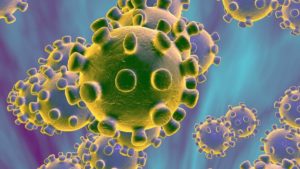
Coronavirus: what is it?
According to the WHO definition:
“Coronaviruses form a large family of viruses present in humans and animals. Those that affect humans can cause a range of symptoms, from the common cold to more serious illnesses such as Middle East Respiratory Syndrome (MERS) and Severe Acute Respiratory Syndrome (SARS)”.
What is this new coronavirus?
The new virus identified on 9 January 2020 and which first appeared in China at the end of December 2019, with the outbreak located in Wuhan, was initially called 2019 n-cov before being renamed coronavirus 2019 or COVID 19 by the WHO on 11 February 2020.
According to the WHO:
- There is no cure or treatment for this new virus, nor is there a vaccine
- “2019-nCoV can cause respiratory illness and can be transmitted from person to person, usually through close contact with an infected patient, for example in the home, workplace or healthcare setting”.
- However, the symptoms themselves can be treated
- Antibiotics only work on bacteria and not viruses, so they are ineffective in treating the virus
- “Symptoms depend on the virus, but the most common include breathing difficulties, fever, cough, shortness of breath and breathing difficulties. In more serious cases, infection can lead to pneumonia, severe acute respiratory syndrome, kidney failure and even death.”
- The incubation period can be as long as 14 days, so an infected person may not show any symptoms for the entire period..
What are the WHO’s recommendations?
To protect yourself, the only WHO recommendations are :
- Wash your hands frequently with a hydroalcoholic solution or soap and water to kill the virus
- Avoid close contact – keep at least 1 metre away from other people, especially if they are coughing, sneezing or have a fever. This is to avoid inhaling the virus and being contaminated in turn.
- Avoid touching your eyes, nose and mouth.
- In the event of fever, cough or shortness of breath, consult a doctor immediately and tell him or her if you have travelled to a region of China where 2019-nCoV has been reported, or if you have been in close contact with a person from China who is showing respiratory symptoms.
- If you have mild respiratory symptoms and have not travelled to China, follow basic respiratory and hand hygiene rules carefully and stay at home until you are well, if possible.
Is this enough?
However, as with common flu, the majority of victims were people with weakened immune systems, such as the elderly, or people with weakened immune systems (e.g. cancer). (Editor’s note: we also found that most of the victims had co-morbidities such as diabetes, overweight or obesity). These people should therefore be sheltered and their state of health monitored in particular, following the WHO recommendations above.
For other populations, I suggest that you boost and stimulate your own defence resources and immune system. But above all, I would advise you not to panic or become obsessed.
My Naturo advice
Here are my suggestions on how best to protect yourself against the coronavirus and all other viruses, particularly the flu virus.
Stress Management
As we’ve seen in previous articles, and as I keep repeating in my lectures and training courses, stress is the number one factor in lowering the immune system, among other things, and in aggravating symptoms and disorders (particularly digestive and skin disorders, for example).
My first piece of advice is to manage stress using the tools available to you. I have a soft spot for Cardiac Coherence, which was popularised by the late David Servan-Schreiber in his anti-cancer campaign.
For those who don’t (yet) know about this fabulous tool called cardiac coherence, I invite you to find out more, for example via Françoise Servan-Schreiber’s website, where you can watch the video below to practise cardiac coherence. The idea is to practise abdominal breathing while following (in the exercise below) the movement of the ball as it inhales and exhales. For best results, you should practise this exercise for 3 to 5 minutes 3 or 4 times a day.
But you can also practise yoga and mindfulness meditation, take part in sport and physical activity, do relaxation exercises, and use essential oils such as Petit Grain Bigaradier or Yuzu….. It’s up to each person to find their own way of managing stress, once the causes have been identified.
Lifestyle, sleep and the immune system
Second piece of advice: a good night’s sleep.
It’s just as important to get enough sleep, because it’s during sleep that the body regenerates and carries out its repair and recovery functions. A whole chronobiology is set in motion at night; it is in fact in the middle of the night that we produce our growth hormone, which is necessary for cell renewal and good tissue development, in particular our muscles, which are a main source of glutamine, essential for our immunity.
To encourage good sleep, it is worth identifying the causes of poor sleep and remedying them.
White Chestnut Bach Flower can be used if you have a tendency to ruminate in the evening when you go to bed and to have that “little bicycle in your head”, as well as plants with well-known sedative and anxiolytic properties such as Valerian and Passionflower, and also Escholtzia for problems with falling asleep and restless sleep with night-time awakening.

Third tip: Be sufficiently physically active to build muscle (glutamine reservoir), eliminate toxins through perspiration and stimulate a good metabolism, which means the body functions properly. You should also keep well hydrated.
Diet, microbiota and the immune system
Tip 4: Eat a healthy, balanced, living diet
Health begins in the intestine, since, as you know, the immune system is 70% represented there thanks to our “friendly” bacteria, so it goes without saying that a diet that is as healthy and rich as possible in antioxidants and protective polyphenols, and in fibre-rich plants (and therefore everything that is bifidogenic) is the way to go.
- Lots of whole vegetables and fruit, as much raw food as possible (the limit will be your ability to digest raw food and therefore the richness and variety of your microbiota – see the article on intestinal flora). Live food is richer in vitamins and enzymes.
- As little processed food as possible (zero if possible)
- As little meat as possible, especially intensively farmed meat (which is a vector for antibiotic-resistant bacteria) and white meat (poultry and pork), which is a vector for bacteria and viruses (even if it’s organic)
- And in this case, make up for it by eating a diet rich in vegetable proteins or eggs, lean fish or cheese
- Eat foods rich in probiotics and prebiotics (see the article on intestinal flora).
Food supplements to boost your immune system
And finally, as a last piece of advice, and after you’ve taken all the other steps listed above and taken the usual precautions to avoid viral infection, I’d like to suggest a few food supplements to help boost your immune system.
Please note that you will find advice here, but as the use of active ingredients, even natural ones, has an impact on the body, it is advisable to seek the advice of your doctor before embarking on a course of treatment, particularly for people on immunosuppressive therapy, for whom all the plants recommended here are contraindicated, and other medication (thyroid, for example). The author accepts no responsibility for the use that readers may make of this information without medical advice.
Here are a few plants, food supplements and ancient natural remedies that you can use to boost or optimise your immunity:
The plants
- Echinacea Purpurea, available as capsules, ampoule or mother tincture. Available from the La-Royale laboratory (contraindicated in thyroid disorders and auto-immune diseases)
- Lapacho, a tree from South America known for its action on the immune system, as well as its anti-viral properties. It can also be found in powder capsules, for example. Available from La-Royale.
Probiotics
- Then you can rebuild your flora with probiotics if, despite a good diet, you want to ensure that you have as many immune bacteria as possible in your intestinal flora. For example, I recommend mixes of specific immune strains such as Lactobacillus acidophilus, Lactobacillus plantarum, Bifidobacterium lactis or Lactobaccilus rhamnosus, which can be found in the following products:
- UltraFlora Immune by Bionutrics
- Probiotiques Immunité by Copmed
- Florimmu by Herbolistique (which also contains donkey’s milk, Reishi and vitamin C)
The vitamins
- We should also remember to take vitamin D on a daily basis at around 3000 IU/day during the winter,
- as well as vitamin C at around 1g/day.
Immunity-boosting medicinal mushrooms
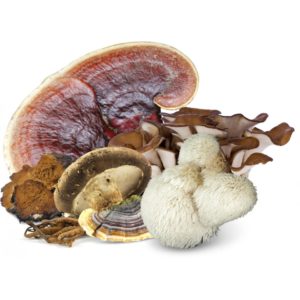
- Finally, we can also turn to Chinese pharmacopoeia and these medicinal mushrooms specific to immunity, such as Shiitake, Maitake and Reishi. These mushrooms can be found in the new product MycoDéfenses from the Copmed laboratory, for example, or in the Défenses Naturelles complex from Herbolistique or Royal Défense (which contains Lapacho, Colostrum, Echinacea and Shiitaké) from La Royale (order code 18082).
The essential oils
- As a preventive measure, you can also take 2 drops of Ravintsara (Cinnamomum camphora cineoliferum) or Tea Tree essential oils 3 times a day, applied to the inside of the wrists, the chest and the upper back, or as a cure in the event of infection on a neutral base or in a little honey or olive oil for a week. You can also clean the air in your home by diffusing the same oils and putting a few drops on a small pebble or in a handkerchief that you can carry around with you all day.
Other immune system nutrients
- Zinc, Selenium, Sulphur, Vit E, A (and other antioxidants), N-Acetyl-Cysteine (NAC)
EDIT of 26/02: I’ve been asked if we could give food supplements to support at-risk populations such as children, infants and the elderly. A product containing Colostrum and donkey’s milk (non-vegan then! but in general, veganism doesn’t concern these populations…) particularly adapted to their situation of weakness as well as people in convalescence in order to replenish their energy, could be the best solution for these more fragile populations. A composition of these products can be found in Colostrum – Donkey Milk from Herbolistique, in addition to vitamin D3 and probiotics.
Take care of yourself!
Contact details for the various laboratories mentioned:
La Royale
www.la-royale.com
Tel : 00800 29 06 82 76 ou 00 352 55 96 44
Order code : 18082
Bionutrics / Metagenics
www.bionutrics.fr
Tel : 0800 900 630 ou +32 42 47 61 61
info@bionutrics.com
Order code : R354
Herbolistique
www.herbolistique.com
Tel : +33 2 51 63 06 24
contact@herbolistique.com
Order code : F 64267
Copmed
www.copmed.fr
Tel : +33 5 49 28 01 36
contact@copmed.fr
Order code : A64493