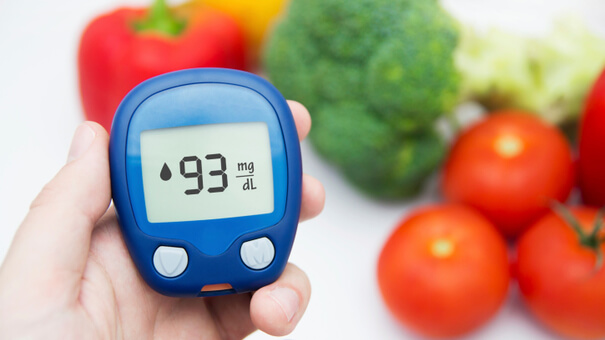
 In 2014, the WHO (OMS) estimated the number of people with diabetes at 422 million. With the numbers continuing to rise each year, the WHO predicts that diabetes will be the 7th leading cause of death in the world by 2030.
What is insulin resistance?
After each meal, the pancreas secretes insulin to signal the body to lower its sugar levels. Under normal conditions, this mechanism triggers storage of excess glucose in the liver, muscles or fatty tissue to limit its circulation in the blood.
In the case of insulin resistance, on the other hand, liver, muscle and fat cells become less sensitive to this hormone. As the pancreatic cells secrete more insulin than necessary (or hyperinsulinaemia), insulin production becomes insufficient, leading to an increase in blood sugar levels (or hyperglycaemia). This insulin resistance often precedes the onset of type 2 diabetes.
Diabetes: prevention, development, causes and risk factors
Diabetes is defined as a disorder in the assimilation, use and storage of sugar in the diet. It is a disease of metabolism and civilisation. In fact, we are seeing an explosion in diabetes at the same time as the development of junk food, a sedentary lifestyle and stress. There are two types of diabetes: type 1 and type 2.
Type 1 diabetes, known as diabetes mellitus (because of the rapid weight loss that is one of its main symptoms) or juvenile diabetes (because it mainly affects young people), type 1 diabetes must be treated with insulin. Type 2 diabetes, on the other hand, is associated with overweight and obesity, and mainly affects adults. Known as chronic hyperglycaemia, type 2 diabetes affects 3 million people in France and is mainly caused by poor eating habits, stress (deregulation of cortisol secretion) and a sedentary lifestyle. In particular, disadvantaged social conditions are correlated with a higher percentage of diabetes in the population.
Microbiota and insulin resistance
A number of studies have also shown a correlation between the state of the intestinal microbiota and the development of insulin resistance and obesity. At my practice, I address these problems in an innovative way, by treating the flora and the intestinal sphere, because I find that the people who come to see me almost systematically suffer from dysbiosis of varying degrees, and often for a very long time (since birth, for example).
Gut microbiota modulate neurobehavior through changes in brain insulin sensitivity and metabolism. Soto M, Herzog C, Pacheco JA, Fujisaka S, Bullock K, Clish CB, Kahn CR. Mol Psychiatry. 2018 Dec;23(12):2287-2301. doi: 10.1038/s41380-018-0086-5. Epub 2018 Jun 18. PubMed PMID: 29910467; PubMed Central PMCID: PMC6294739.
The intricate association between gut microbiota and development of type 1, type 2 and type 3 diabetes. Bekkering P1, Jafri I, van Overveld FJ, Rijkers GT. Expert Rev Clin Immunol. 2013 Nov;9(11):1031-41. doi: 10.1586/1744666X.2013.848793. Epub 2013 Oct 21.
Prevention
Preventing and treating insulin resistance requires a healthy, balanced diet (rich in fibre and raw and cooked vegetables, low in saturated animal fats and sugar, and free from processed foods), weight loss if you are overweight, regular exercise, stress and chronobiology management, and personalised medical monitoring.
A number of biological markers need to be monitored daily in diabetics to calculate their insulin resistance, including the HOMA index and CRP (C-reactive protein). Glycaemic monitoring also involves assessing whether blood sugar levels have risen above 1.26 g/l on an empty stomach and 2 g/l or more 2 hours after a meal. Follow-up also suggests that a rise of more than 5.5% in glycated haemoglobin (HbA1c) implies the presence of chronic hyperglycaemia, and thus makes it possible to detect possible insulin resistance. Controlling blood pressure and monitoring cholesterol levels are also recommended, as diabetes can be associated with high cholesterol and hypertension.
Diabetes is treated with oral antidiabetics, injections or drugs that stimulate insulin production. Conventional treatments include Metformin, which normalises or reduces hyperglycaemia. In the elderly, however, metformin and hypoglycaemic sulphonamides in general can affect renal function, so creatinine levels need to be monitored. Insulin therapy can also be used to combat insulin resistance, although care must be taken not to encourage hypoglycaemia.
Natural solutions for insulin resistance
90% of recorded cases of diabetes are type 2. Since the main causes are obesity and excess weight, the treatment involves a healthy, balanced diet and sufficient physical activity.
In particular, a Mediterranean-style diet should be favoured, with less sugar and refined and industrial products and more fibre, vegetables and fruit.
Diet and healthy living: the essentials
Reduce your consumption of meat and saturated animal fats. A ketogenic or low-glycaemic index diet is also an approach that should not be overlooked, with many results. The idea is to eat more fats, of plant origin and unprocessed, and less sugar at each meal, in addition to regular exercise. Eating fibre and plants as raw as possible will help to modify the intestinal flora which, as we now know, is responsible for many pathologies and metabolic dysfunctions.
Finally, stress management is also essential to avoid disrupting the hormonal and endocrine system and the metabolism.
Caloric restriction
Intermittent fasting can also be effective for weight loss. The principle is to go without food for a given period, generally for at least 12 hours and preferably until 4pm, alternating with a healthy, low glycaemic index, balanced diet. The absence of food will be compensated for by water intake, with a predominance of low-calorie drinks such as water, tea or herbal teas throughout the day. Weekly fasting or supervised dietary fasting are also very beneficial for regulating the metabolism and also boosting its functions by regenerating it.
Rebalancing the intestinal flora, microbiota and intestinal permeability
Probiotics, L-gasseri in particular, help to re-establish an intestinal flora, with better management and metabolisation of fats and sugars, and combat the transformation of choline into trimethylamine and then TMAO, which is a pro-inflammatory and atherogenic molecule that is particularly dangerous for people predisposed to cardiovascular disease and atherosclerosis. It also addresses intestinal inflammation, which is also present in metabolic disease. Berberine also makes it possible to work on this aspect, as we will see below.
Above all, the intestinal flora will be corrected with a combination of bifidobacterium and prebiotics such as fructo-oligosachharides.
The berberine
To lower blood sugar levels, certain natural molecules are preferable. Berberine, an alkaloid extracted from various plants including the barberry Berberis vulgaris, has hypoglycaemic effects and is consumed in the form of food supplements. Its rebalancing action on the intestinal flora encourages the presence of bacteria beneficial to the proper metabolisation of fats and sugars.
Be careful, however, if you are taking hypoglycaemic drugs, as this type of food supplement with its powerful hypoglycaemic effect is contraindicated because of the potentiation of its effects and the interaction with drugs. The first step is to focus on changing eating habits, lifestyle habits and stress management, with holistic support.
Quercetin
An antioxidant and anti-inflammatory, quercetin is a flavonoid found in many fruits and vegetables, including berries, cherries, citrus fruits, green vegetables (spinach, broccoli, green beans) and bulbs.
Curcuma
The main ingredient in curry and a staple of Indian cuisine, turmeric helps to improve blood sugar levels, reducing insulin resistance and the inflammatory state that accompanies these diseases.
The cinnamon
Finally, cinnamon has long been recognised for its hypoglycaemic and antibacterial action, which helps to naturally lower blood sugar levels and rebalance the intestinal flora. Rich in essential oils, phenols, tannins and proanthocyanidins, cinnamon has antioxidant properties and can be used to treat insulin resistance.
Oligotherapy
An essential trace element, chromium increases tissue sensitivity to insulin. It is found in particular in brewer’s yeast and calf’s liver, but also in smaller doses in broccoli, green beans, potatoes, asparagus, whole-grain cereals, wheat germ, plums and mushrooms. Chromium helps regulate blood sugar levels and curb sugar cravings, making it an ideal ally for weight loss.
Phytotherapy
In herbal medicine, certain ingredients are well worth a look to combat insulin resistance. In particular, Gymemna Sylvestris helps to lower blood sugar levels in type 1 and 2 diabetics. Derived from Ayurvedic medicine, gymnema or shardunika is also known in India as gurmar, literally “which destroys sugar”.
With its hypoglycaemic action, Olive oil is also hypotensive and suitable for type 2 diabetes..
In small doses, garlic also helps the liver to regulate excess sugar and improve blood circulation.
Anti-oxidants help prevent oxidative stress, carbonyl stress and glycation. Found in tea, dark chocolate or nuts, they help reduce the risk of type 2 diabetes, according to an Inserm study published in the scientific journal Diabetologia on 9 November 2017.
Nutritherapy
In nutritherapy, various trace elements are essential for combating and preventing diabetes. A study published in the journal Clinical Nutrition suggests that a good intake of magnesium acts on insulin.
Supplementation with vitamin C in particular (at a rate of 1000mg/day), vitamin E and other antioxidants, especially for older, overweight or obese people, helps to control blood sugar levels and regulate insulin.
Co-supplementation with vitamins D and K reduces insulin resistance and promotes the elasticity of the arteries.
A diet rich in Omega 3, nicotinamide and other B vitamins, as well as a vegan and raw food diet, are also worth exploring.
And let’s not forget Chinese energy, acupuncture and osteopathy, which will help you to act holistically.
Take care of yourself!
Nadia Rasamoely