
The effects of coffee on health
The second most widely drunk beverage in the world after water, with almost 2.5 billion cups consumed every day, coffee is synonymous with pleasure and concentration. At home, at the bar or at work, alone or in good company, coffee is much more than just a drink. And yet, we dread drinking it just as much as we love it. Focus on its effects on health.
You’ve always heard that you shouldn’t drink too much coffee and that it’s potentially bad for your health.
I’m going to give you some scientific information to help you better understand what’s going on and give you my recommendations for drinking this very popular beverage.

What’s wrong with coffee?
The sugar
First of all, the main problem with coffee is not the coffee itself, but the sugar you add to it when you find the taste too bitter. Above all, it’s the habits you develop when you first discover this very bitter beverage. While some people may later be able to enjoy their coffee without sugar, others will continue to add sugar, even in small quantities. In any case, this is not advisable. In fact, a healthy diet is one in which sugar consumption is avoided as much as possible, particularly refined white sugar, but also any food with a high glycaemic index, including sugar.
Sugar also accelerates the ageing process because it stimulates insulin growth factor (IGF-1).
Acrylamide
Secondly, the big problem with coffee in terms of health is its acrylamide content, a chemical substance derived from the process of cooking at very high temperatures, which is known to be carcinogenic and to accelerate the ageing of arterial walls. It is this substance that is found in the famous “Maillard molecules”, which are the result of overcooking products containing proteins and carbohydrates – the “caramelisation” or glycation of proteins.
Not only are these molecules potentially carcinogenic, but they also transform proteins, making them much less absorbable by the body. This means that an overcooked protein is of little use in nutritional terms (e.g. grilled meat).
These Maillard molecules can also be recognised by the golden, browned or scorched colour of foods that have undergone this transformation, and you know what? they’re everywhere: crisps, coffee, bread crusts, quiche dough, pizza, grilled meat, burnt crème caramel, golden biscuits and cakes, the brown colour of Jordan’s type cereals, rusks, Krisprolls, etc, etc, etc….etc… But it’s also found mainly in cigarette smoke.
So what can you do to avoid them, since they’re absolutely everywhere? In the end, it’s quite simple: as this transformation is due to heavy cooking and grilling, we should only eat food that has been gently steamed or cooked below 110°C. In this way, all the foods we cook in this way do not contain these Maillard and acrylamide molecules.
The caffeine
Then there’s the infamous caffeine, which leads us to believe that coffee eliminates our tiredness, when in fact it’s just an illusion. It certainly gives you a boost because it’s stimulating and causes a spike in insulin, but as we know, too much insulin all day long is inflammatory and increases insulin resistance.
In fact, according to numerous studies, excessive caffeine consumption is correlated with :
- a greater risk of cardiac arrhythmia
- an increase in histamine in the stomach, responsible for the rise in hydrochloric acid and the aggravation of gastritis, gastro-oesophageal reflux, ulcers, etc… in addition, as allergy sufferers know, histamine is inflammatory and can contribute to the development of inflammatory intolerances and intestinal permeability or leaky gut (a common factor in allergic conditions)
- an increase in homocysteine and a higher risk of thrombosis, phlebitis, embolisms and strokes by inhibiting the absorption of B vitamins
- greater tiredness, irritability, greater vulnerability to stress, anxiety and burn-out, and greater risk of osteoporosis, due to the loss of magnesium and calcium that its consumption causes through its diuretic and acidifying effect.
However, there have also been recent studies on the positive elements that coffee may contain.

The active ingredients in coffee
Various studies carried out on coffee have identified its various active properties. As well as caffeine, its main active component, a cup of coffee also contains vitamins (such as E, PP and B9) and minerals (such as potassium, sodium and magnesium). Coffee is also rich in phenolic acid, a powerful antioxidant, and terpene alcohol.
Is coffee good for your health?…
Low in calories, coffee can have an impact on our lifestyle and daily habits. By acting on the cerebral arteries, this beverage is appreciated for its ability to improve concentration and alertness. By improving our long-term memory capacity, it helps to reduce age-related forgetfulness, and is an effective anti-migraine remedy.
A study conducted at the University of Southampton and published in the British Medical Journal compiles the results of over 200 meta-analyses on the effects of coffee on health. The results show that coffee can reduce a number of diseases, including liver disease. In a meta-analysis published in Diabetes Care in 2014, researchers concluded that coffee consumption reduces the risk of type 2 diabetes. The effects of coffee on reducing the risk of cancer were set out in a study published in 2011 in Cancer Epidemiology, Biomarkers & Prevention. In particular, it showed that drinking 3 cups of coffee a day can reduce the risk of developing endometrial cancer by 25%. The American Gastroenterology Association concluded that 3 cups of coffee a day can halve the risk of liver cancer. Other studies have demonstrated the positive effect of coffee on cases of breast, prostate, pancreatic and skin cancer.
As well as having stimulating qualities for the body, coffee is also an excellent slimming agent. By accelerating fat burning, it eliminates dietary excesses and naturally increases energy expenditure. A study published on 11 July 2017, as well as a publication in the journal Annals of Internal Medicine, have finally shown that coffee can reduce the risk of mortality by 12 to 18% and can improve life expectancy.
… but beware of excess
Consumed in high doses, however, coffee can disrupt sleep and cause anxiety or irritation. Excessive caffeine consumption can increase the risk of bladder, colon and rectal cancer. It can also increase cholesterol levels and hypertension, as well as meningeal haemorrhage in people at risk, among other things.
A study has shown that drinking more than 4 cups of coffee a day in the over-55s increases the risk of death from all causes.
That’s why it’s essential not to abuse coffee and to limit your consumption if you want to get the most out of it.
The benefits of coffee are often cancelled out by consuming too much of it.
These doses are more akin to addiction, as is very often the case for many people, particularly city dwellers working in large towns. In this case, it’s easier to find yourself in situations where excessive coffee consumption will have a negative impact on your health, as with red wine, which is rich (for some people only) in resveratrol, but whose beneficial effects are partly erased by alcohol and has an impact on the liver.
My naturopathic recommendations
As far as I’m concerned, if the person has no particular health problems, I’d recommend limiting coffee consumption to 2 a day, avoiding drinking it in the morning to avoid the early insulin peak that occurs with substances that are too stimulating, even if they don’t contain sugar. This is particularly true if you are practising intermittent fasting, as coffee will interrupt your fast because of the insulin spike, raising blood sugar levels. So it’s better to drink your coffee after breakfast and after a meal containing proteins and fatty acids. Even if, in my view, this could disrupt digestion.
Given the deleterious effects on health, as we saw at the beginning of this article, if you drink too much, it’s wiser to reserve your consumption for moments of limited pleasure, and in this case you’d be better off drinking organically-grown coffee of the Arabica or Robusta variety. The best time for chronobiology is after midday.
In cases where there are health problems or disorders of any kind, I recommend avoiding coffee.
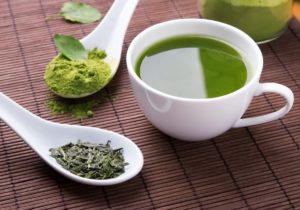
It would be much better to drink green tea, or even better Matcha green tea for its antioxidant properties, Rooibos, Hibiscus or Chicory!
So, despite all the studies and the proven benefits of coffee, I don’t consider coffee to be a health food. In my opinion, a healthy food should be (and remain) beneficial whatever the dose consumed and whatever the health or age of the person consuming it. But especially with coffee, over-consumption can happen very quickly and I’d rather not convey a message that would encourage people to abuse it on the pretext that it’s good for their health, because excesses can have a serious impact.
As with meat, alcohol and cheese, the nutritional benefits will soon be limited by the negative consequences of over-consumption.
But there’s nothing to stop you from consuming these products from time to time, including coffee, for moments of pleasure. In this case, it would be wiser to opt for top quality, great Robusta or Arabica and organic, to enjoy it even more. And there’s also the option of non-acidifying coffee…
As far as decaf is concerned, the ingredients are exactly the same as for decaf, the only difference being that there’s much less caffeine, provided it’s extracted using water and not solvents such as chlorine.
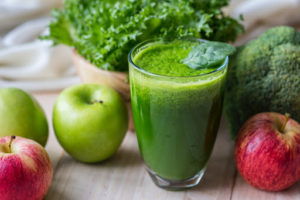
As far as I’m concerned, I’ll be drinking green vegetable juice, Matcha green tea or Hibiscus 😉

Enjoy your meal!
https://www.anses.fr/en/content/acrylamide-foods
Liu J, Sui X, Lavie CJ, Hebert JR, Earnest CP, Zhang J, Blair SN. Association of Coffee Consumption With All-Cause and Cardiovascular Disease Mortality. Mayo Clin Proc. 2013 Aug 13. pii: S0025-6196(13)00578-8. doi: 10.1016/j.mayocp.2013.06.020.
https://www.iarc.fr/wp-content/uploads/2019/03/pr267_E.pdf
Tuomilehto J : Coffee consumption and risk of type 2 diabetes mellitus among middle-aged Finnish men and women. JAMA. 2004, 291(10):1213-129.
Hata M : Osteoporosis as a lifestyle-related disease. Nippon Rinsho. 2003, 61(2):305-313
Arthur Eumann Mesas, Luz M Leon-Muñoz, Fernando Rodriguez-Artalejo, Esther Lopez-Garcia; The effect of coffee on blood pressure and cardiovascular disease in hypertensive individuals: a systematic review and meta-analysis, The American Journal of Clinical Nutrition, Volume 94, Issue 4, 1 October 2011, Pages 1113–1126, https://doi.org/10.3945/ajcn.111.016667
Wautier JL, Schmidt AM. «Protein glycation: a firm link to endothelial cell dysfunction». Circ Res. 2004 Aug 6 ; 95 (3): 233-8. Review.
Ann H. Rosendahl, Claire M. Perks, Li Zeng, Andrea Markkula, Maria Simonsson, Carsten Rose, Christian Ingvar, Jeff M.P. Holly, Helena Jernström. Caffeine and Caffeic Acid Inhibit Growth and Modify Estrogen Receptor and Insulin-like Growth Factor I Receptor Levels in Human Breast Cancer. Published OnlineFirst February 17, 2015; doi: 10.1158/1078-0432.CCR-14-1748 Clin Cancer Res April 15, 2015 21; 1877
Cyril Laurent, Sabiha Eddarkaoui, Maxime Derisbourg, Antoine Leboucher, Dominique Demeyer, Sébastien Carrier, Marion Schneider, Malika Hamdane, Christa E. Müller, Luc Buée, David Blum. Beneficial effects of caffeine in a transgenic model of Alzheimer’s Disease-like Tau pathology. Neurobiology of aging. 31 March 2014. DOI: 10.1016/j.neurobiolaging.2014.03.027
Romano GH, Harari Y, Yehuda T, Podhorzer A, Rubinstein L, Shamir R, Gottlieb A, Silberberg Y, Pe’er D, Ruppin E, Sharan R, Kupiec M. Environmental stresses disrupt telomere length homeostasis. PLoS Genet. 2013 Sep;9(9):e1003721. doi: 10.1371/journal.pgen.1003721. Epub 2013 Sep 5.
Freedman ND, et al. Association of coffee drinking with total and cause-specific mortality. N Engl J Med 2012; 366:1891-1904.
https://sante.lefigaro.fr/actualite/2014/03/25/22142-alimentation-trop-cuire-peut-nuire